
Key Firearms in American Military History: A Comprehensive Overview
Explore the pivotal firearms that shaped American military history. Understand their impact and evolution. Read the article for a comprehensive overview.
Firearms in American Military History: Why Collectors Value the Past
American military history is shaped by the battles fought and by the firearms that played critical roles in those conflicts. The weapons used by soldiers reflect both technological advancements and the nation’s spirit.
Collectors who study and preserve these historic firearms are essential in safeguarding authentic pieces of this narrative. Through these weapons, we gain insights into the defining moments of American history, revealing stories of bravery and sacrifice that go far beyond their use in combat.
Revolutionary Beginnings: The Birth of the American Firearm Tradition
The firearms of the Revolutionary War played a pivotal role in the fight for independence, reflecting the technological advancements and urgent needs of a developing nation. Collectors value these historic weapons for the stories they tell about early American military history.
Types of firearms used
The colonies relied on Short Land muskets and French Model and Spanish Model infantry muskets for supplies during the war’s early stages. Cannons also played a role in battlefield strategy, while the Pennsylvania long rifle emerged as a notable choice for American sharpshooters. This rifle was lightweight and slender, initially designed for hunting, making it an effective weapon in the American Revolution.
Technology and necessity
In the early years of the Revolutionary War, the lack of manufacturers limited the availability of guns. However, as the demand for weapons grew due to the escalating conflict, production ramped up significantly to meet the needs of the Continental Army. This necessity marked a pivotal moment in the evolution of American weaponry.
Appeal to collectors
Collectors are drawn to Revolutionary War guns for several reasons. Firstly, their historical significance provides a tangible connection to a transformative period in American history. Additionally, the early technology and craftsmanship of these weapons showcase the ingenuity of the time. The rarity and high value of these artifacts further enhance their appeal, making them sought-after pieces.
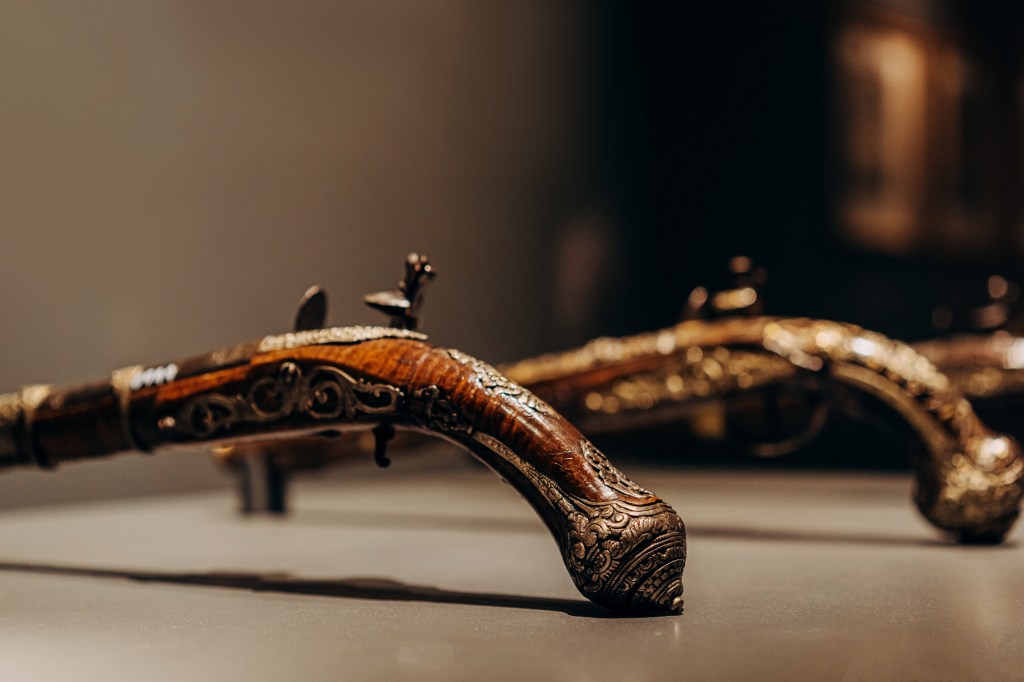
Evolving Technology Through the Civil War and Beyond
As industrialization advanced, so did military weapons, which played a crucial role in transforming American warfare. The shift from smoothbore to rifled barrels, along with repeating actions and standardized manufacturing, transformed combat and produced iconic pieces still coveted by collectors.
Advancements in military equipment
Industrial advancements had a profound impact on the evolution of firearm technology. The introduction of repeating actions enabled soldiers to fire multiple rounds without needing to reload after each shot. This technological leap and standardized manufacturing improved efficiency and increased the army’s firepower. Such advancements were particularly evident during the American Civil War, where the Union’s industrial capabilities provided it a significant advantage on the battlefield.
The rise of rifled muskets
Among the most revolutionary developments in military guns was the rifled musket. The grooved barrel design enabled shooters to achieve greater range and accuracy compared to traditional smoothbore muskets. The Springfield armory model, adopted as the primary infantry weapon of the Union Army, exemplified the advantages of rifled muskets. This innovation marked a turning point in military tactics, as soldiers could engage enemies from farther away with increased precision.
Early automatic weapons
Early automatic weapons also emerged during this period, notably the Gatling Gun. As a hand-cranked machine gun that could fire over 200 rounds per minute, the Gatling Gun represented a significant leap forward in firepower. This revolutionary weapon introduced the concept of automatic fire on the battlefield and foreshadowed the development of future automatic guns.
Handguns in military use
Handguns played a vital role in military operations, particularly among cavalry and officers. One of the most iconic models from this era is the Colt Army Model 1860. These sidearms provided soldiers and commanders with reliability and ease of use, proving essential during close-quarter combat.
Collector’s perspective
Collectors highly seek military arms for various reasons, including their historical significance and the evolution of visual technology. The impact of the industrial revolution on weaponry not only reflects technological advancements but also serves as a precursor to American military history that unfolded in the 20th century.
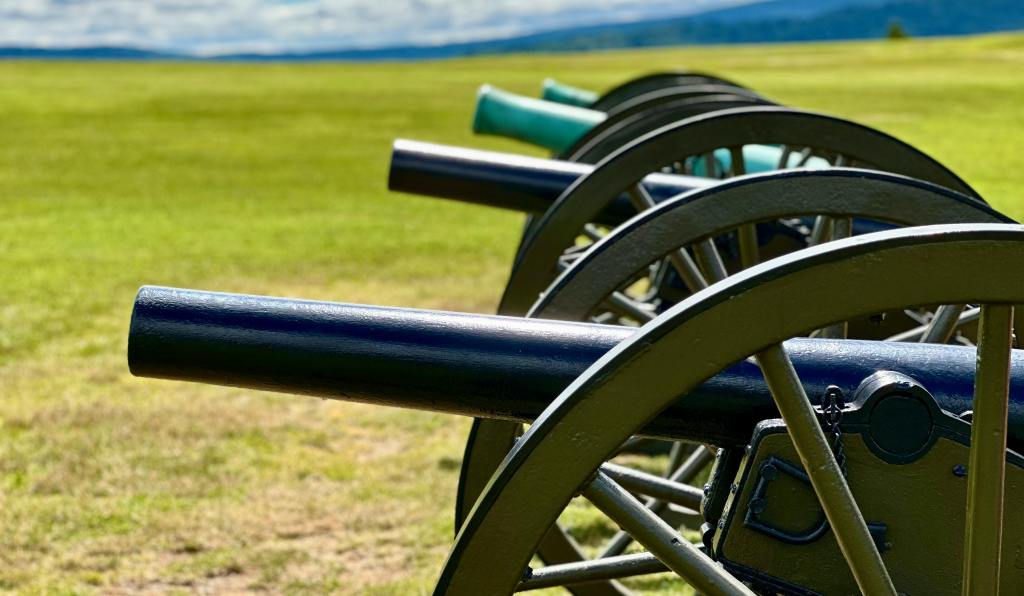
The Global Conflicts: WWI and WWII Service Weapons
The World Wars marked a pivotal evolution in military technology, particularly through the introduction of mass-production methods, semi-automatic platforms, and standardized service rifles.
Firearms of World War I
World War I was characterized by trench warfare and marked as one of the deadliest conflicts in history. The effects of the Industrial Revolution led to significant advancements in military technology, transforming the battlefield.
Bolt action rifles
The primary rifles used in WWI included the M1903 Springfield and the M1917 Winchester. The M1903 Springfield, chambered in .30-06, was the standard-issued rifle for American soldiers, known for its reliable bolt-action design. The M1917 Winchester, derived from the British Pattern 1914, was also a bolt-action rifle and gained a reputation for its accuracy and firepower.
Pistols and shotguns
The Colt M1911 served as the standard-issued sidearm during the war, highly regarded for its reliability and exceptional accuracy. The Winchester Model 1897 shotgun, a pump-action design, found a crucial role in the trenches, providing American troops with effective firepower in close combat situations.
Machine guns
Machine guns saw extensive use by American forces during World War I, transitioning from defensive to offensive roles as the war progressed. Technological advancements led to the development of lighter, more portable machine guns, which were often deployed alongside biplanes on the battlefield.
Firearms of World War II
World War II brought about further advancements in design, particularly with the introduction of more sophisticated automatic weapons.
Fully automatic rifles
The M1 Garand, also known as the M1 Rifle, was notable for being the first autoloading rifle to be adopted as a standard-issue infantry weapon. Its semiautomatic action provided increased firepower, accuracy and reliability, making it vital not only during WW II but also in the Korean War.
Thompson submachine gun
The Thompson submachine gun, widely recognized as the “Tommy Gun,” gained notoriety for its automatic firing capability, becoming a staple of the Allied Forces in the trenches and urban combat. The Browning M1919A4 machine gun, a standard tripod-mounted option, provided dependable fire support during the war.
Small arms
The Colt M1911A1 was once again a standard-issued handgun and noted for its improved firing mechanism, continuing the legacy of its predecessor and maintaining its reputation for reliability in combat situations.
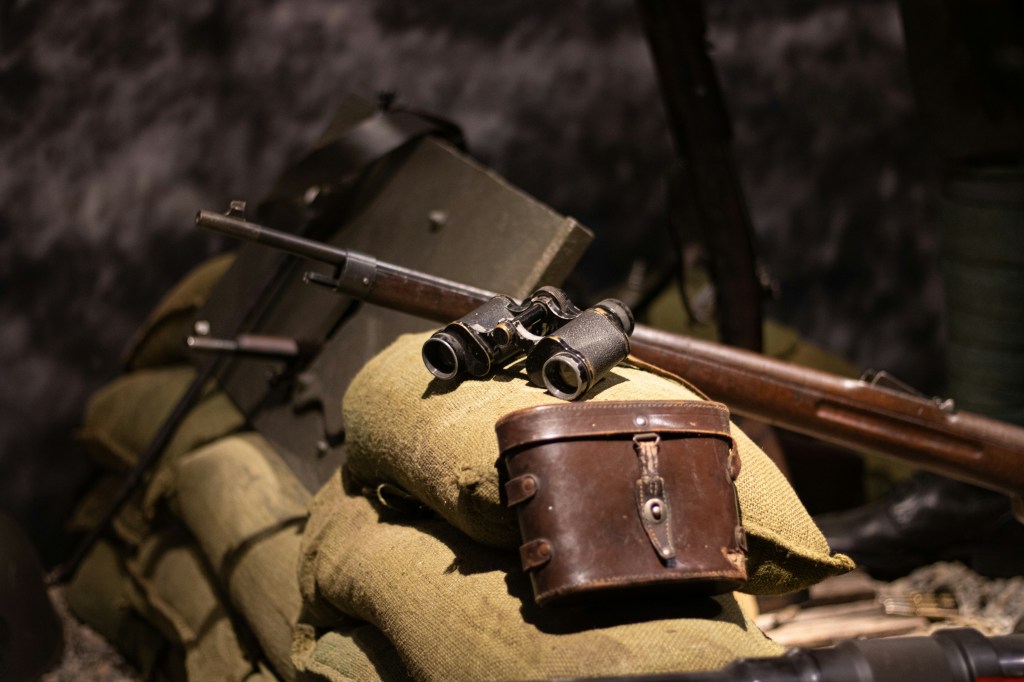
Museums, Memory, and the Complexity of Interpreting Firearms
Museums play a vital role in contextualizing weapons, shaping our understanding of them as complex tools deeply intertwined with political, cultural, and human narratives. This perspective allows us to engage with the multifaceted context of weapons and their impact on society.
Storied history
By focusing on informed preservation, collectors contribute to reflecting the broader implications of military and historic significance of American weapons. Their efforts help to ensure that these artifacts are presented as significant components of our shared human experience.
Balancing display and historical context
A successful museum exhibition strikes a balance between visual display and historical context. This balance is essential in encouraging visitors to reflect critically on the role of weapons in society. By providing historical context, museums can facilitate meaningful discussions about the relationships between weapons, culture, and the human experience.
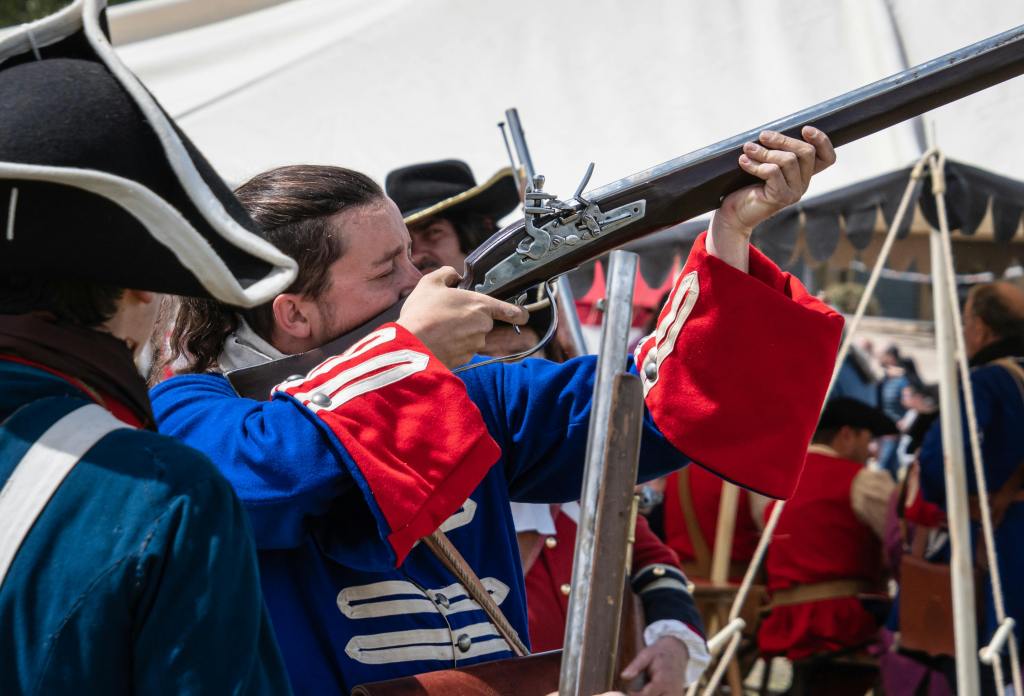
Authenticity Matters: Identifying and Verifying Military Firearms
For collectors, authenticity is of utmost importance when it comes to historic firearms. Differentiating between genuine service weapons and replicas is vital for collectors to preserve and value these items. This guide highlights key factors to ensure investment in authentic historical pieces.
Serial numbers
Serial numbers are often the first line of defense in assessing authenticity. Genuine firearms typically have unique serial numbers that can be cross-referenced with manufacturer records or historical databases. Any inconsistencies, such as mismatched numbers or obvious tampering, can raise red flags.
Unit markings
Unit markings can reveal its association with specific military units. These markings can provide valuable context regarding the weapon’s service history and can help confirm its authenticity. Collectors should familiarize themselves with common markings associated with specific units and time periods.
Provenance paperwork
Provenance paperwork serves as a crucial piece of evidence in proving a firearm’s authenticity. Documentation that details the ownership and history of the firearm can help to trace its lineage and verify its legitimacy. Some overlooked details can be notes about whether it was used in a rifle squad or an infantry squad. For more information on provenance paperwork, check out our blog.
Period-correct features
Authentic firearms often exhibit specific characteristics and craftsmanship that reflect the era in which they were produced. You should do some research and learn the features that differentiate a semi-automatic rifle and an automatic rifle, for instance. Any alterations or modifications that are not known historical standards may indicate a replica or a later rebuild.
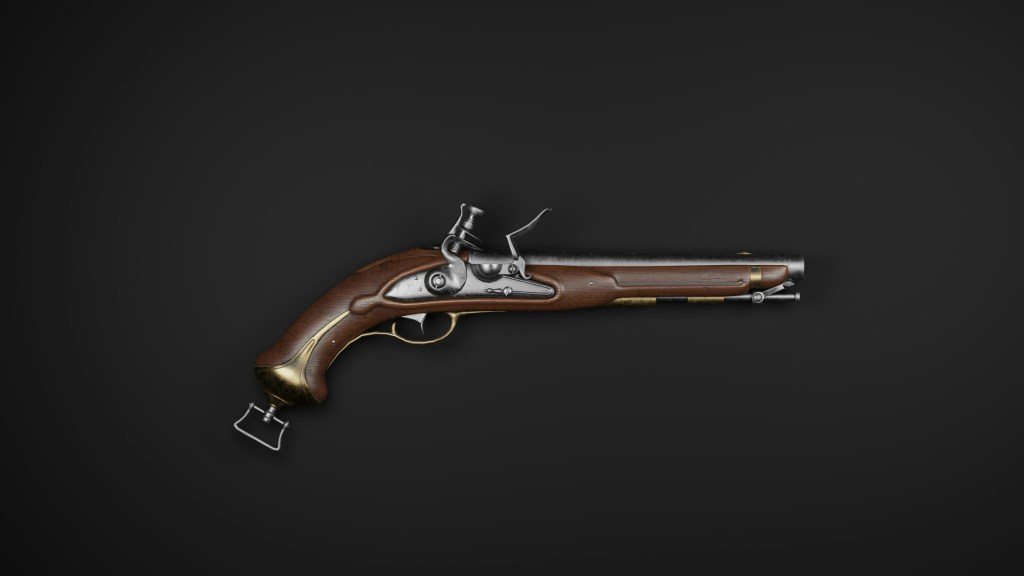
Preservation and Restoration: Caring for Historic Weapons
Preserving a firearm’s original character is crucial for maintaining its historical and monetary value. With proper storage, respectful cleaning, and historically accurate restoration techniques, collectors and enthusiasts can ensure the longevity and integrity of these significant pieces.
Proper storage
Utilizing gun safes prevents unauthorized access and provides a secure environment for these cherished weapons. Additionally, maintaining humidity control within the storage area significantly reduces the risk of damage, such as rust and corrosion. It’s essential to remember that all ammunition should be stored separately from firearms to prevent any potential hazards.
Respectful cleaning
Always practice firearm safety by ensuring the weapon is unloaded before beginning any cleaning process. Disassemble the firearm and use a cleaning rod with a cleaning patch and solvent, inserting it from the chamber end to remove fouling. Repeat until the patch is clear, then use a dry cloth to remove any residue. Focus on key components, such as the action, bolt/slide, frame, and magazine, if you’re familiar with them. Always work in a well-ventilated area when using solvents for safety.
Restoration
Accuracy is key to maintaining their value and integrity. Consulting with a professional is highly recommended if you’re considering restoration options. Amateur attempts at restoration can lead to irreversible damage, negatively impacting the firearm’s value and historical significance. Taking the time to seek expert advice ensures that any restoration work is performed skillfully, thereby preserving the essence of these iconic firearms.
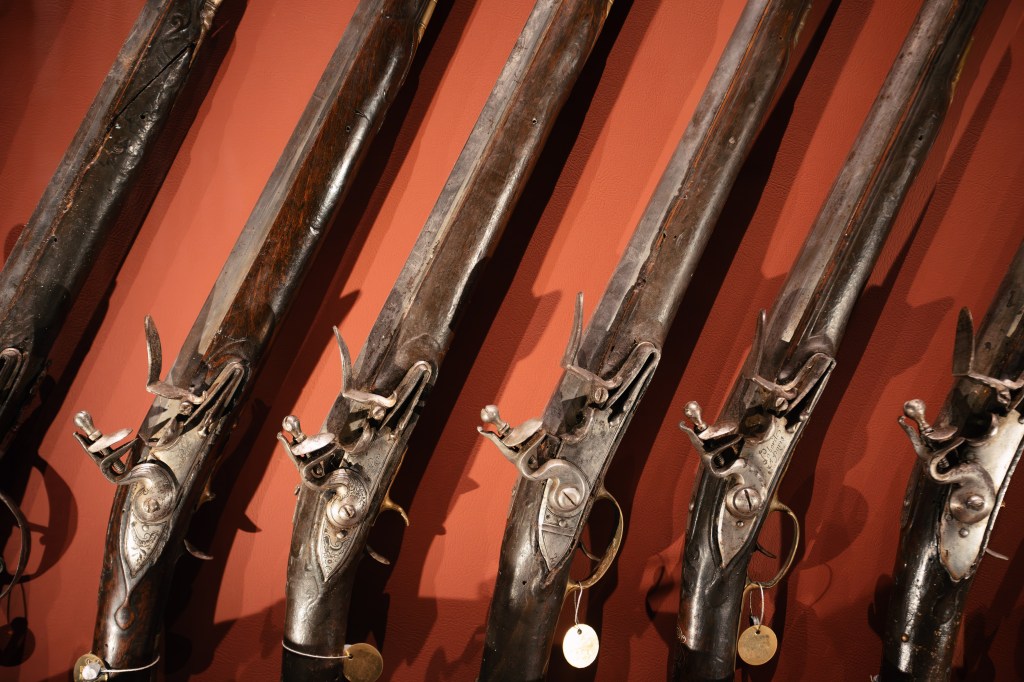
Why Collectors Seek Military Firearms: Purpose, Legacy, and Investment
Military weapons embody innovation, sacrifice, and a nation’s identity. Collectors are often drawn to these artifacts to honor the service members who wielded them. Each piece in a collection tells a story, representing moments in history and the evolution of warfare.
Collectors engage in the preservation of historic firearms, ensuring that future generations can appreciate and learn from these artifacts. Ultimately, the pursuit of military firearms is driven by a deep respect for history and a desire to keep the memories of those who served alive.
Protecting Your Historical Firearms with Insurance
Historic military firearms are irreplaceable. Specialized insurance ensures they’re protected from theft, damage, or loss, safeguarding both financial and historical value.
At 1776 Insurance, we offer comprehensive coverage tailored specifically for gun collections. Our policies feature higher limits of protection, offering peace of mind both at home and while you’re away, including during travel or exhibitions. Additionally, we simplify the process for collectors by not requiring appraisals for most items, making it easier for you to insure your gear without the added hassle.
Sources
https://www.americanrevolutioninstitute.org/exhibition/a-revolution-in-arms/
https://www.nramuseum.org/gun-info-research/pieces-of-history.aspx
https://thepanorama.shear.org/2018/09/17/its-complicated-the-short-answer-to-firearms-museums-and-history/
https://www.ebsco.com/research-starters/history/firearm-collecting
https://greenlinearms.com/the-role-of-firearms-in-military-history/
https://www.turnbullrestoration.com/firearms-history-early-american-military-weapons/
https://acoup.blog/2020/11/13/collections-why-military-history/
https://arsof-history.org/articles/19_aug_form_follows_function_page_1.html
https://en.wikipedia.org/wiki/List_of_individual_weapons_of_the_U.S._Armed_Forces
https://www.military.com/army-birthday/history-of-us-army-weapons.html?amp
https://www.historyhit.com/key-weapons-of-the-american-civil-war/
https://www.historytools.org/stories/weapons-of-the-american-civil-war-how-technology-shaped-the-conflict
https://www.historynet.com/weapons-of-world-war-i/
https://www.slashgear.com/1854852/most-famous-notorious-weapons-ww2/
https://www.guntrack.app/the-most-important-american-firearms-of-world-war-ii-a-technical-and-historical-analysis/